
The land remembers.
So does he.
Cormac Stone
The Book
In the hospital clinics of London, he is a man of the shallow breath, a doctor who moves through the glass and pale light of corridors as though the past were a condition long treated, its symptoms suppressed and filed away. He speaks the cold, precise English of ledger and landlords, never letting his voice sink to where the centuries lie compressed beneath him, dense as peat.
But the body remembers. His feet still know Famine roads, ditches that yielded too easily, the earth that took too many and asked no permission.
He is An Coisí, the Walker, a function of the soil dressed in a white coat.
With every screech of the Northern Line he hears what lives on the other side of sound: the hollow quiet of a village returned to silence as though it had never spoken. In the black mirror of the carriage window, the tunnel gives back not his own face but the hollow eyes of the vanished. The sterile air dissolves, replaced by the sweetness of rot, and his mouth fills with the taste of grass, the last meal of the desperate, the final communion of the starved.
When a summons comes from the West of Ireland, he can no longer resist the pull of the land that once claimed him and has been waiting ever since. He returns not as a prodigal, but as a witness to the silence where the hunger still lives.
His wife, Seraphina, is his only anchor, a woman with a past she does not offer and a patience that defies explanation. Together they move through a landscape where dúchas, the deep belonging of blood and soil, refuses to be silenced, and where the voice of the uilleann pipes may be the only instrument capable of exhuming what was buried.
***
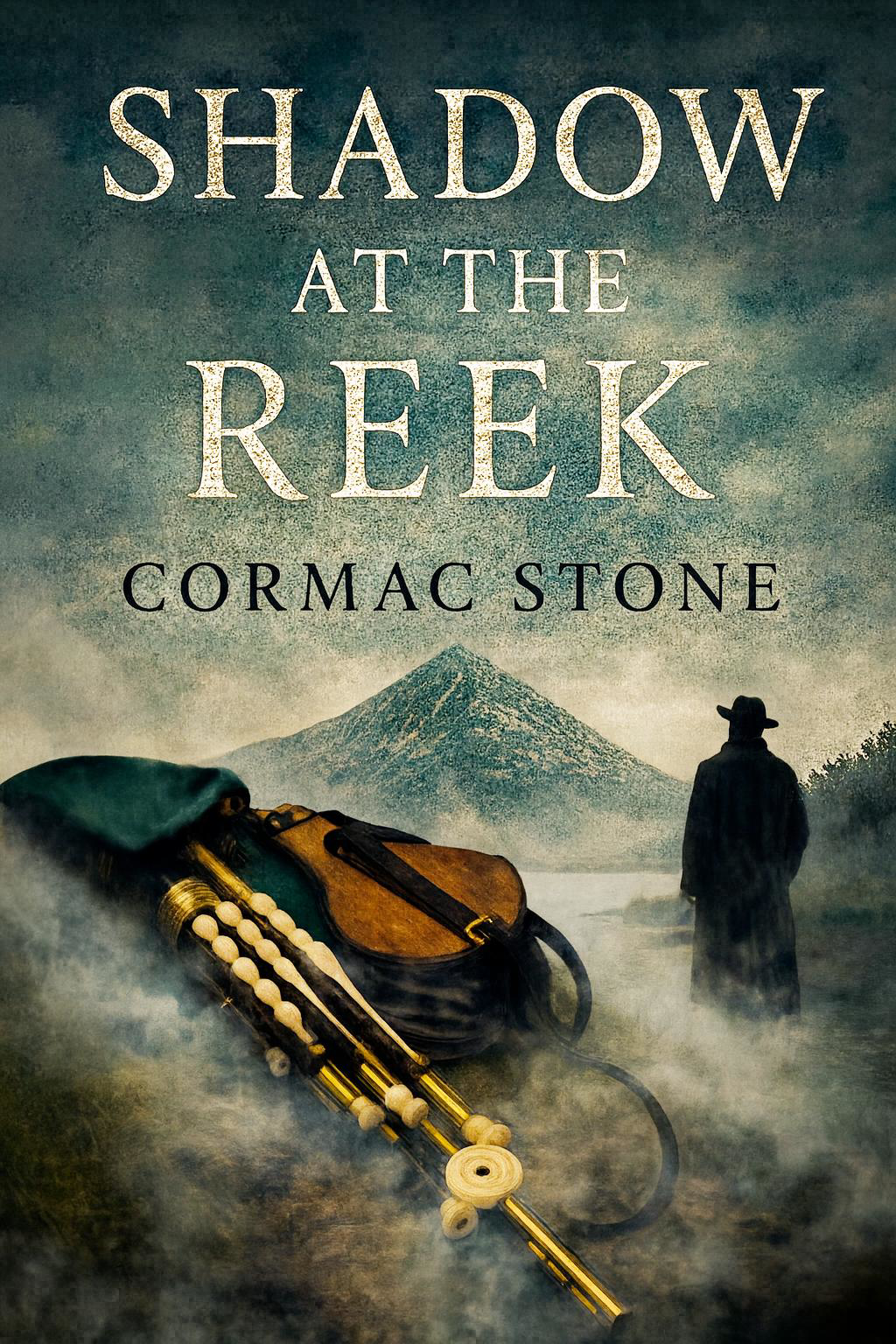
Shadow at the Reek is a novel of ancestral reckoning and inherited grief. An immortal soul returns to Mayo to name the Famine dead. Literary fiction rooted in landscape, language, and the long memory of the West of Ireland.
Carrying the visceral force of Paul Lynch’s Grace and the slow, suffocating sense of place found in Andrew Michael Hurley’s The Loney.